Successful Solutions Professional Development LLC
  • Unit 5 Home Page
    • About Us
    • About the Trainers
    • Blog
    • CDA Credentialing Process
    • CDA Success Stories
    • CDA Course Synopses
    • What is a CDA?
  • Enroll Now
  • Student Log-In
  • Contact Us
  • Virtual Classroom
    • Unit 1
    • Unit 2
    • Unit 3
    • Unit 4
    • Unit 5
    • Unit 6
    • Unit 7
    • Unit 8
Sentry Page Protection
Please Wait...
Unit 5 Student Login  Unit 5 Student Login Hi, (First Name) Member Area | Log Out
Unit 5 Student Login
Welcome, (First Name)!

Forgot? Show
Log In
Enter Member Area
(Message automatically replaces this text)
OK
My Profile Log Out

(Unit 5) Topic 1: Environments that Nurture Children

1 Clock Hour of Early Childhood Education
Dividing the Classroom

​Topic 1 Page 6

Picture
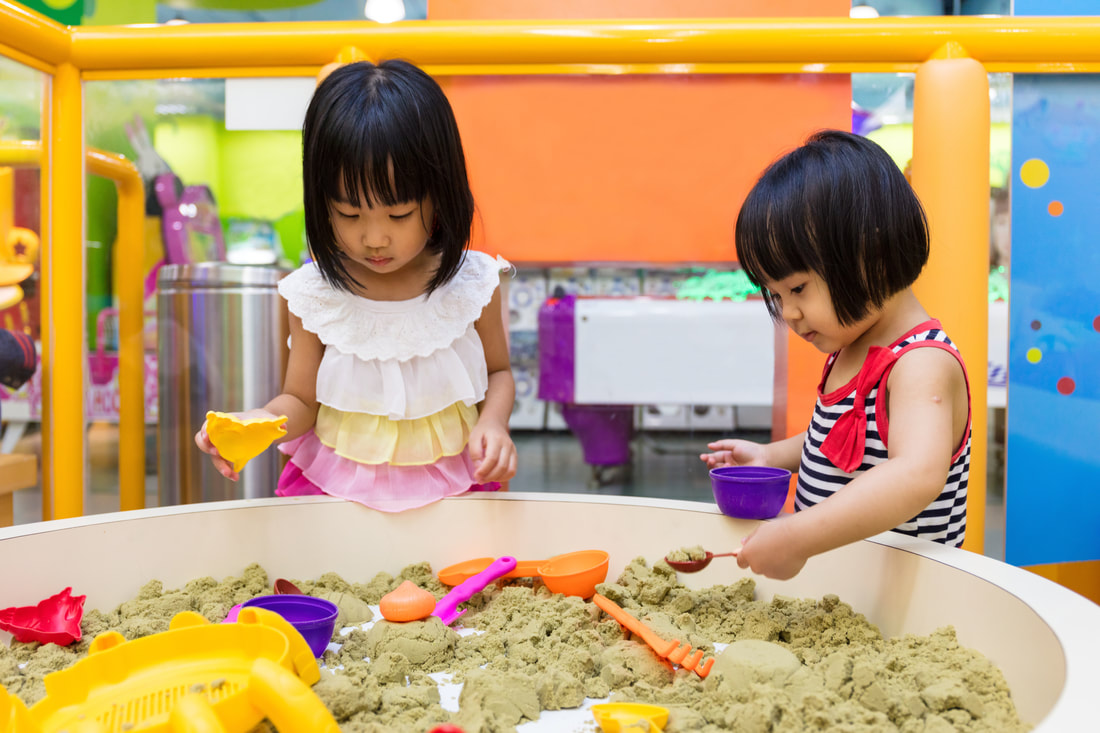
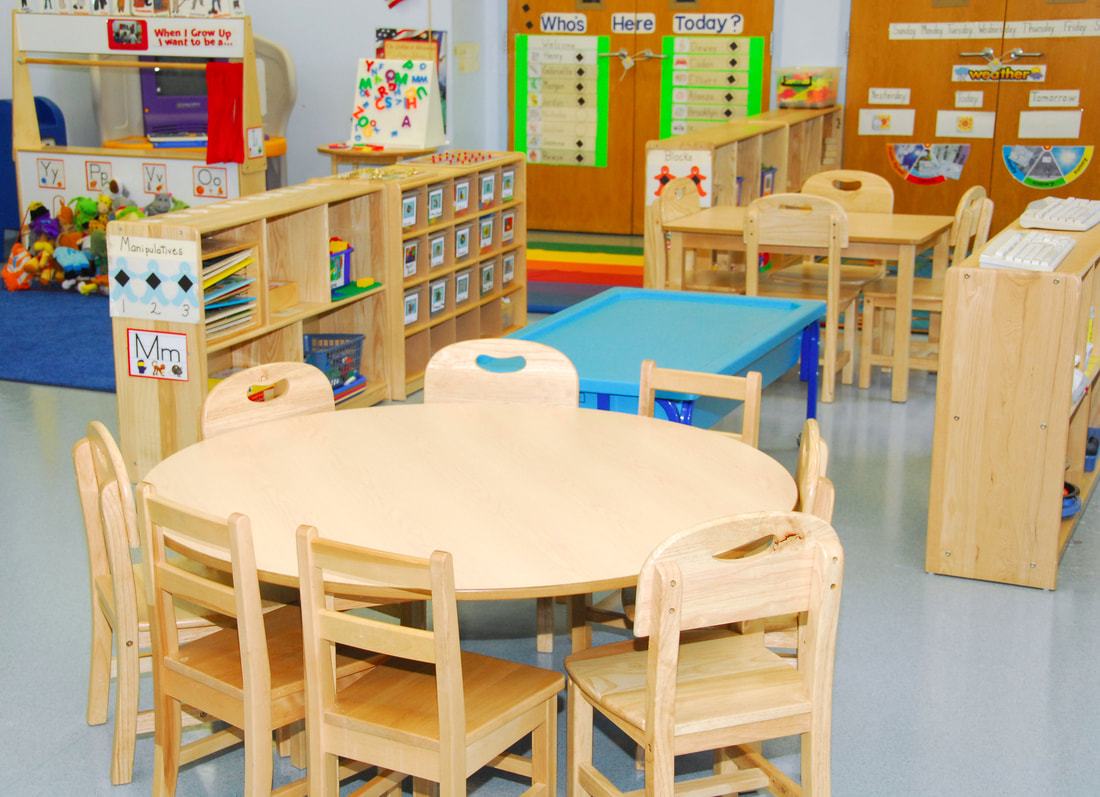
​Activity areas, learning centers, or interest centers are interchangeable names for the smaller area divisions in a classroom where individual or small groups of children can select or engage in a specific type of activity.  ​A learning center has boundaries that help to define the number of children and the activities for the area.  For example: A toddler room may have a quiet small space next to a wall with an activity box and a pillow, a perfect place for a single child to rest.  The four-year-old classroom may have a large dramatic play and dress-up area that encourages children to engage in collaborative and cooperative play experiences. The key is to plan the size and boundaries of the learning center based on the age of the children and the purpose of the learning experience.
Early childhood educators use learning centers as a central part of lesson planning that encourages children to self - select activities. Centers provide structure to the experiences of young children by providing a planned environment that encourages children to independently explore learning materials.   ​
The early childhood classroom should have a variety of areas for learning and play. These should include blocks, manipulatives, and books, as well as areas for dramatic play, science, music, and art. The boundaries should be well-defined by bookcases or other dividers. A learning center includes the materials required for the center activities and facilitates developmental play and learning experiences.  The block center would include the shelf unit for storage of the blocks, wooden unit blocks, plastic blocks, props such as cars, people, or animals, car mat, and pictures of buildings, race tracks, and other topics of interest.  
Picture
Areas should also be arranged so that children can use them without help and can guide themselves in selecting activities.  Examples:  A reading area will need to include storage for books, such as a basket or a book shelf, and soft elements, such as a pillow or chair that allows children to sit down and read.   A writing center includes a table, chairs, and shelf with writing materials such as paper, pencils, crayons, and stencils that can be used in writing and drawing.  
Quiet areas should be separated from noisy ones, as should wet and dry spaces. Soft, quiet, inviting areas should be provided, so that a child can read a book, talk to a friend, or simply get away from classroom activity for a few minutes.
The classroom should have adequate storage space for children and adults.
​Finally, the classroom should be arranged so that children can move smoothly from one activity to another.
For example, children should not have to walk through the block area, disturbing the work there, to get to the art area.
Picture
  • Maximizing Outdoor Play: Moving Interest Centers Outdoors, By Nancy P. Alexande, Excelligence Learning Corporation
  • Creating Indoor Environments for Young Children, By Francis Wardle, Ph.D., Excelligence Learning Corporation
  • Video: Making Room for Play: The Preschool Room Plan, Environments
  • Making, Tinkering, and The Toy Store Project, NAEYC
Picture
Picture
(Unit 5) Topic 1: Environments that Nurture Children * Navigation Menu
Picture
Picture
Picture
Picture
Picture
Picture
Picture
Picture
Picture
Picture
Picture
Picture
Picture
Picture

Successful Solutions Training in Child Development
Address: PO Box 727, Burley, WA 98322-0727  * www.mycdaclass.com
Copyright 2017.  Successful Solutions Professional Development LLC.  * All Rights Reserved. Updated JULY 1, 2017


Successful Solutions Professional Development LLC BBB Business Review

Enrollment Hours

Monday - Friday          7  am – 8  pm 
Saturday & Sunday     9  am – 8  pm
Holidays                       9  am – 8  pm

Telephone

(360) 602-0960 

Email

[email protected]
Registrations that are submitted after enrollment hours will be processed the next morning.  You will receive an email with your log-in information to access the course within an hour after we open the next business day.
  • Unit 5 Home Page
    • About Us
    • About the Trainers
    • Blog
    • CDA Credentialing Process
    • CDA Success Stories
    • CDA Course Synopses
    • What is a CDA?
  • Enroll Now
  • Student Log-In
  • Contact Us
  • Virtual Classroom
    • Unit 1
    • Unit 2
    • Unit 3
    • Unit 4
    • Unit 5
    • Unit 6
    • Unit 7
    • Unit 8